
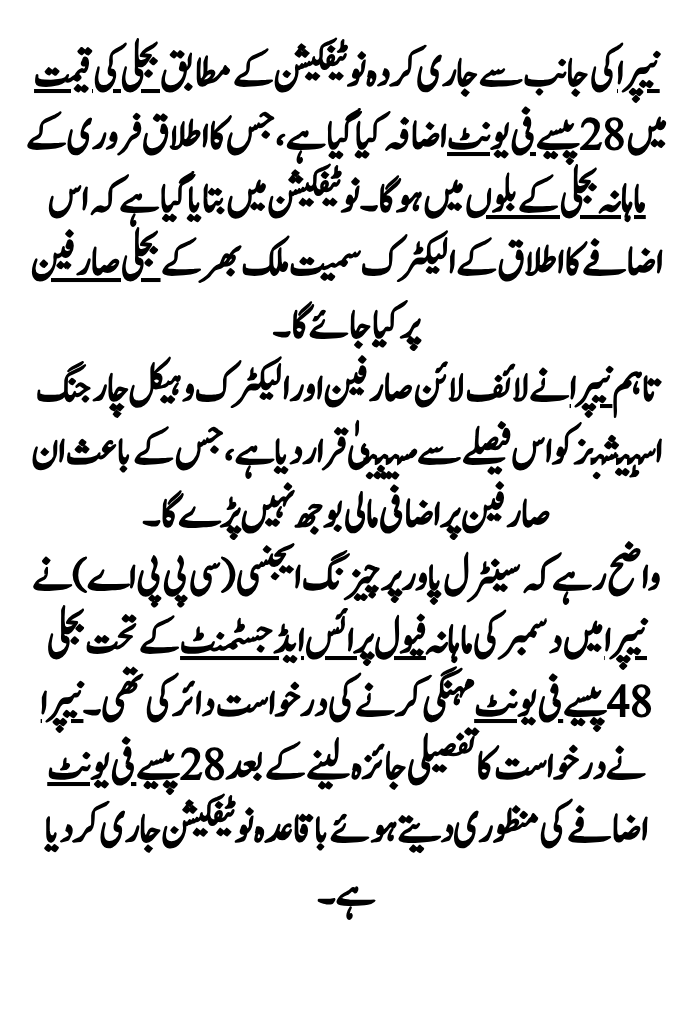
Pakistan’s power consumers are set to face a slight rise in electricity bills after the National Electric Power Regulatory Authority (NEPRA) approved an increase of 28 paisa per unit. This adjustment adds to ongoing concerns about rising utility costs amid inflationary pressure.
Why Has NEPRA Approved the Electricity Price Hike?
NEPRA approved the increase as part of routine tariff adjustments, often linked to fuel cost variations, capacity charges, and changes in power generation expenses. Such revisions are usually carried out to ensure that power producers can recover costs while maintaining supply stability.
Although the increase may seem minor per unit, its cumulative impact can be noticeable for households and businesses that consume higher electricity units each month.
Key Highlights at a Glance
| Detail | Information |
|---|---|
| Approved by | NEPRA |
| Price increase | 28 paisa per unit |
| Impact | Higher monthly electricity bills |
| Likely reason | Fuel and generation cost adjustments |
| Affected users | Domestic & commercial consumers |
Who Will Be Affected the Most?
Domestic Consumers
Households with higher electricity usage, especially during peak seasons, are likely to feel the impact more significantly. Even small per-unit increases can add up on monthly bills.
Commercial & Industrial Users
Businesses that rely heavily on electricity may see operational costs rise, which could eventually reflect in product prices and services.
How This Fits into Pakistan’s Energy Landscape
Pakistan’s power sector continues to face challenges such as:
- Rising fuel import costs
- Circular debt
- Capacity payment obligations
- Dependence on imported energy sources
Periodic tariff increases like this one are often aimed at reducing financial pressure on the power sector, though they add to consumer burden.
What Can Consumers Do to Manage Higher Bills?
To minimize the impact of rising electricity prices, consumers can:
- Use energy-efficient appliances
- Reduce peak-hour electricity usage
- Shift to LED lighting
- Monitor monthly consumption closely
Small changes in usage habits can help offset the impact of tariff hikes over time.
Conclusion
The 28 paisa per unit electricity price increase approved by NEPRA may appear modest, but it contributes to the growing cost of living for consumers across Pakistan. While such adjustments are intended to stabilize the power sector, they underline the need for long-term energy reforms, increased reliance on local and renewable sources, and better efficiency across the system.